Showing posts with label gulf coast. Show all posts

Monday, September 24, 2012

Farm to Table (Farm to Fork) Dinner


  • What: Farm to Table Dinner, Four courses, featuring locally grown foods,prepared by local chefs 

  • When: Tuesday, September 25, 6-9 pm 

  • Where: Location: Jon Archer Agricultural Center, 1070 Schillinger Rd. N. Mobile, AL 

  • How: Cost: $65 per person Reservations by September 12 If paying by check, make it payable to: 
    • Mobile County Master Gardeners
    • 112915 Dauphin Island Parkway
    • Coden, Alabama 36523

What's on the Menu?


Registration


Check out the Brochure!


Pin It

Monday, August 27, 2012

Are your plants hurricane ready?


Let's face it. When a hurricane comes, your plants will almost inevitably take a beating. However there are things you can do to save some plants, and help others weather the storm. So, after you get your water, food, batteries, and flashlights ready, it's time to take care of your flora friends.

For potted plants:

  • Any plants that you can move into the house, or an enclosed are that will not flood nor get sweltering hot.
  • Any plants that cannot be moved inside, try to move them against the side of the house or against a sturdy fence to block much of the wind.
  • Stabilize any outdoor plants with stakes, twine, or by covering with a sheet of plastic that has slits or small holes in it to prevent being taken by the wind and is also secured to the ground. It is also a good idea to lay large potted plants down, to drastically reduce wind damage.


For trees:

  • There's really only one thing you can do, last minute, to protect your trees. Prune. Reduce the length of branches so they are more difficult for the wind to break the limbs or even the whole tree.
However, there are some things you can do, for trees, early on that will help when hurricane season rolls back around.


Here's some sage advice from the Institute of Food and Agricultural Sciences at the University of Florida.


  • Plant tree species that are high quality, have good structure and are more wind resistant such as:
    • Crape myrtle
    • Cabbage Palm
    • Dogwood
    • Live Oak
    • Southern Magnolia
    • Sweetgum
  • Match recommended species to the local site conditions. Consider soil properties (soil depth, water table and compaction) and aerial space needed for a mature-sized tree. Avoid planting trees near power lines or close to buildings.
  • Consider planting trees in groups of five or more as opposed to individually. But be sure to give trees adequate rooting space with no obstructions.
  • Plant a variety of species, ages, layers of trees and shrubs to maintain diversity.
  • Establish a structural pruning program early on. This will reduce the length of branches competing with the main trunk, promoting optimal tree health.


Pin It

Friday, August 17, 2012

What To Plant Right Now!

It's time to plant for the fall. Along the gulf coast, that means you should be planting the following varieties in August.

Winter Squash

from whatscookingamerica.net


Pumpkins

from expatriotskitchen.blogspot.com


Melons

from foodsubs.com


Cucumbers

from flowerdalenurseries.blogspot.com


Corn

from thedailygreen.com


Pole beans

from gurneys.com


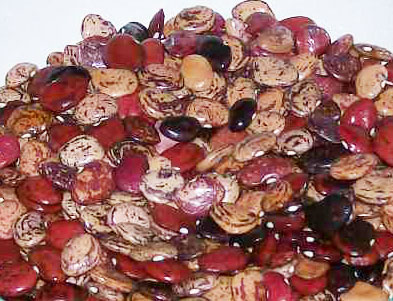
Lima Beans

from southernexposure.com


Beets

from indieogdenutah.com


Carrots

from housebeautiful.com


Collards (and some other leafy greens)

from edenbrothers.com


Pin It

Monday, August 13, 2012

Alabama Red-belly

As you know, taking care of gardens doesn't stop at your property line. Everything in nature is intrinsically connected. If you don't care for the plants and animals in your area, you're indirectly endangering your own plants. It is for this reason that many people are trying to conserve both plants (heirloom and organic) and animals (endangered species).

Today I'd like to highlight the Official Reptile of the State of Alabama.

Photograph by Bob Moul 2007


The Alabama Red-belly Turtle has been on the endangered species list since 1987 and was adopted as the state reptile since 1990. These beautiful turtles reside mainly in Mobile and Baldwin Counties, but they can also be found along the Mississippi Gulf Coast (Check the map from US Fish and Wildlife Services below and find out what other species are endangered in your state here).

The most distressing part of this creature's plight is that it is man-made. For the Alabama Red-belly, the number one cause of death is automobiles. That's right, even with all of the alligators, herons, feral hogs, fish crows, and raccoons out there preying on the hatchlings, more of these turtles are killed by our own cars than anything else.

from outdooralabama.com


There's good news, however. In 2008, a fence was erected along the causeway to help protect the baby turtles. And help it did! According to Dr. David Nelson of the University of South Alabama, 94 babies and 15 adults were hit by automobiles in 2007. In 2008, those numbers dropped to 19 hatchlings and 9 adults--an overall reductions of 80%!

from savetheredbelly.org


from savetheredbelly.org
This news is especially good, since a recent study concluded that roughly 6% of all drivers will actually swerve to hit animals in or near the road. 

The next time you're down on the bay and you see one of our friends trying to cross the road, stop the car and help them out. I promise you'll feel great for the rest of the day!

from outdooralabama.com


Pin It