Showing posts with label plant in spotlight. Show all posts

Tuesday, September 11, 2012

Plant in Spotlight: Asparagus

If you've never thought about growing asparagus, you are truly missing out. 

This beautiful and delicious plant is easy to manage, and, if do it right, will keep coming back, on its own, for twenty or more years!

from gardenrum.com

If you want to start asparagus from seed, now is the time to do it. Keep in mind, however, that if you do start it by seed, it will take 2-3 years before you can start harvesting. You can't be short-sighted here. With asparagus, you're in it for the long haul. You do have the option of buying some asparagus that has already developed for at least a year to cut down on your wait time, but it's definitely more rewarding to start the seeds yourself!


If asparagus is something that tickles your palate in just the right way, why not try this classic heirloom variety from Sustainable Seed Co. The Mary Washington Asparagus
Pin It

Wednesday, August 8, 2012

Plant In Spotlight - Siam Tulip "Curcuma alismatifolia"

I don't know if anyone told you, but the Siam tulips have been blooming like crazy this year and that is such a wonderful thing! 

from 123rf.com


Siam Tulips, scientifically named Curcuma alismatifolia, are not actually related to the tulip. They're actually a type of ginger and are fairly close to turmeric.


from beechwoodlandscape.blogspot.com

Kingdom: Plantae

(unranked): Angiosperms
(unranked): Monocots
(unranked): Commelinids
Order: Zingiberales
Family: Zingiberaceae
Genus: Curcuma
Species: C. alismatifolia


This ginger can stand the Gulf Coast heat and, if cared for properly,
will come back on its own year after year.
 Because of that, and the breathtaking blooms,
 we highly recommend this ginger variety for your garden.
You won't regret it.

Pin It

Monday, June 4, 2012

Blue(berry) is the New Black(berry)

Okay, while blueberries are fantastic, we may not want to exchange blackberries for blueberries in our gardens (I certainly wouldn't), you should consider planting some as well. Blueberries are easier to grow, easier to pick, and is extremely delicious and nutritious. Blueberries are high in anti-oxidants, which can help prevent cancer.

Blueberries can be found in many varieties, but there are wild blueberries that are native to the U.S., if you're trying to keep things local. 

When planting blueberries, you should remember that while some varieties are partially self-pollinating, it's generally a good idea to plant two or more different varieties that produce in succession. That ensures a larger crop and a longer growing season. 

from logantrd.com

The Rabbiteye Blueberry is native to the southeast. 

You don't have to plant them in the ground. Blueberries can live, and produce, while in pots--so if you're short on space, or don't have a lawn, grab a couple of medium to large pots and get 'em planted.

You need to know, blueberries won't bloom if the soil isn't acidic enough. You don't want to load it with nitrogen. Instead, add some peat moss and loads of organic matter to the soil. This will help the plants give you the berries you crave.

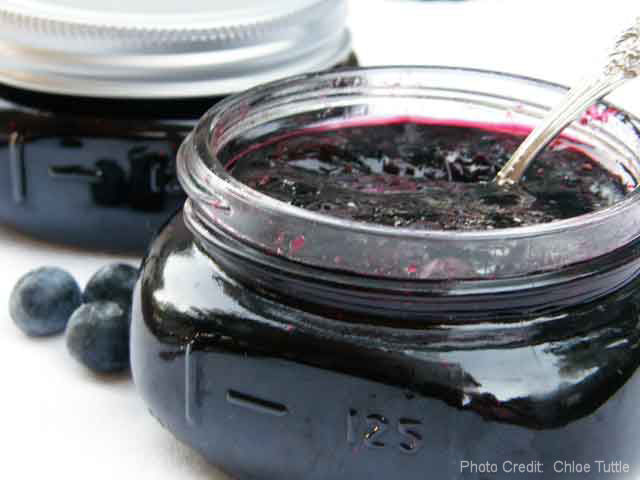
from chloesblog.bigmill.com

Here are some of the things you can make with blueberries (once you've turned purple from eating so many off the bush!): syrups, jams, pies, cobblers, muffins, smoothies, and home-made breads!

For an in-depth look at blueberries, check out this article by Agricultural Research Service from the USDA.

Pin It

Monday, April 30, 2012

Plant in Spotlight - Aloe

Anyone who beaches it up during the summer is familiar with this plant. Aloe (aloe vera is the most common species) is a succulent native to Africa; and in the summer, it can be your best friend.


Have you ever seen aloe bloom? This is the first stage. It forms a large stalk from the center with the buds coming out from several small stalks on the side. 


Photography by Brandon McLeod


Photography by Brandon McLeod


Kingdom:                Plantae
clade:            Angiosperms
clade:                   Monocots
Order:              Asparagales
Family:    Xanthorrhoeaceae
Subfamily: Asphodeloideae
Genus:                            Aloe


Photography by Brandon McLeod


Photography by Brandon McLeod


Aloe very blossoms are loved by many pollinating insects, but also the beautiful hummingbird, 

Photography by Brandon McLeod

The blooms!

Photography by Brandon McLeod


Photography by Brandon McLeod


Aloe has been used for healing burns and cuts for thousands of years. However, did you know that it's also a healthy drink?
from asianfoodgrocer.com
Be careful though! You don't want to rip off an aloe leaf and try to eat it. Raw aloe contains aloin which is a natural laxative! Be sure only to consume processed aloe, which does not contain aloin!
Pin It

Monday, April 9, 2012

Plant in Spotlight - Paw Paw - An American Classic

The paw paw is native to Eastern, Southern, and Midwestern United States. 
It is the only temperate member of a tropical family of trees.


from npr.org


Scientific classification
Kingdom: Plantae
Order:  Magnoliales
Family:  Annonaceae
Genus:     Asimina
Species:       A. triloba


The paw paw is high in vitamin C, proteins, and anti-oxidants. 

from totallyangel.com

Where, oh where is pretty little Susie?
Way down yonder in the paw-paw patch.


Come on, boys [or girls, or kids], let’s go find her,
Come on, boys, let’s go find her,
Way down yonder in the paw-paw patch.


Pickin’ up paw-paws, puttin’ ‘em in her pockets,
Way down yonder in the paw-paw patch.
-Traditional American Folk Song


You can even make paw paw wine.

Pin It

Monday, April 2, 2012

Plant in Spotlight - Amaryllis / "I Bless the Rains Down in Africa!"

The gorgeous flower amaryllis comes from southern Africa.

Photography by Brandon McLeod 

Kingdom:              Plantae
Clade:                 Angiosperms
Clade:                      Monocots
Order:              Asparagales
Family:        Amaryllidaceae
Subfamily:    Amaryllidoideae
Genus:                  Amaryllis

Photography by Brandon McLeod 
Amaryllis comes in a stunning variety of reds, pinks, and whites!

Photography by Brandon McLeod 

Amaryllis is typically sold as a bulb, but it can also spread by seed.

Photography by Brandon McLeod 

Belladonna Lily, Naked Lady, Amarillo, and March Lily 
are some of the common names for Amaryllis.

Photography by Brandon McLeod 

Bees love 'em!

Photography by Brandon McLeod 

I hope that ends up in some locally produced honey!

Photography by Brandon McLeod 

Check out our aisle of amaryllis. And look, there's our PTS(uv)!

Photography by Brandon McLeod 

The name comes from a character in Virgil's Ecologues. 

Photography by Brandon McLeod 

Though you can find amaryllis just about anywhere, they do best on the West Coast, since it is similar to its natural African habitat.


To Africa: Thanks for such a beautiful flower! To all our readers: Keep planting!

Pin It

Monday, January 23, 2012

Not Your Average Quat!

In the spotlight: Kumquats!


Kumquats (Cumquats) are small edible fruits from the kumquat tree. They look and feel like oranges, but they're only about the size of an olive. The kumquat flesh has a slightly sour citrus taste, while the skin (Yes, you eat the skin too!) has a sweet citrus taste. Kumquats are the only citrus commonly eaten skin and all.

From easybloom.com
If you're strong-willed enough to not eat all of them directly off of the small trees, you can make them into kumquat jellies, marmalades, and even liquors. They also make a great addition to lunches or make healthy snacks. 


From meyerlemontree.com
The trees are extremely hardier compared to other citrus trees and can easily withstand Mobile winters. 


Pin It